Microdramas in India: the $80 million Eloelo bet, Dolphin AI and what comes next
Two-minute episodes, a phone held upright and a cliffhanger every time. A producer's view of why microdramas exploded in India this year, and what Eloelo's big bet tells us about where they go next.
Key points
- Microdramas will earn about $20 billion worldwide in 2026. India's revenue more than tripled to $322 million, per Media Partners Asia.
- 89% of Indian viewers find microdramas through social feeds, and 47% say AI-made ones feel unique and creative, per Meta and Ormax.
- EloElo, owner of Story TV, raised $80 million from Hornbill Capital and NBCUniversal at a $500 million valuation.
- It then launched Dolphin AI Film Studio at IFFI Goa, with a World Lock feature that keeps characters consistent across scenes.
- The real challenges are paying viewers, thin margins and quality at scale. AI helps most when writers and directors stay in charge.
The first time someone pitched me a drama with two-minute episodes, I honestly thought it was a trailer strategy. A teaser, maybe. Not the show itself.
Then I watched how people around me actually used their phones. On the metro, in a lunch queue, in the ten minutes before sleep. Nobody was starting a 45-minute episode. But everybody was tapping "next".
That habit has turned into a business worth about $20 billion a year worldwide. In India this year, it more than tripled. And in November, two pieces of news told me the format has properly grown up: EloElo, the company behind Story TV, raised $80 million with NBCUniversal on board, and three weeks later launched an AI film studio built to make microdramas faster and cheaper.
Here is what I think it all means, as someone who makes these stories for a living.
So what exactly is a microdrama?
A microdrama is a scripted series made for a phone held upright. Each episode runs one to three minutes in a 9:16 frame and ends on a hook. String 30 to 80 of them together and you have a full story, usually 75 to 80 minutes in total. That is a feature film, served in bites.
The economics are what make the writing so particular. Viewers usually watch the first few episodes free, then pay with a subscription or coins to keep going. So every episode has one job: make you need the next one.
When I explain this to traditional TV writers, I put it like this: forget the act break. Every two minutes is an act break.
In a microdrama, the last five seconds of an episode are worth more than the first five minutes of a TV show. That is where you win or lose the viewer.Kallol Guha, Senior Producer, FilmE Productions
The numbers that made everyone pay attention
Media Partners Asia published its Micro Drama Economy 2026 report on 26 November, and it is the clearest picture we have.
| Market | 2026 revenue | What changed |
|---|---|---|
| Worldwide | $20 billion | Up 24%; forecast $32 billion by 2031 |
| China | $15.2 billion | 76% of the global total; growth now slowing |
| Outside China (dedicated apps) | $4.87 billion | Up about a third; forecast $11 billion by 2031 |
| United States | $1.71 billion | Largest market outside China, but flat this year |
| India | $322 million | More than tripled; now Asia's largest outside China |
That last row is the one I keep coming back to. India has passed Japan and Korea to become Asia's biggest microdrama market outside China. Kuku TV and Story TV each roughly tripled their revenue this year.
Forecasts for where this goes vary. Analysts quoted by TechCrunch expect India's industry to reach $3 billion to $4 billion a year by 2030. Whatever the exact number, I have not met anyone in the business who thinks it is shrinking.
Who is actually watching
The most useful study I have read on Indian viewers is the Meta-Ormax report, Micro Dramas: The India Story, published in March. They spoke to 2,000 viewers aged 18 to 44 across 14 states, and a few findings changed how we plan shows at FilmE.
- 89% discover microdramas through social feeds. People do not search for them. A clip finds them on Instagram or Facebook, and they follow it to an app.
- 65% discovered the format within the last year. Most of this audience is brand new.
- A median of 3.5 hours a week, usually in seven or eight short sessions, peaking between 8pm and midnight.
- 57% of viewing is "ambient", meaning people watch while doing something else.
- Romance, family drama and comedy lead, in Hindi and English first, then Tamil, Telugu and Kannada.
Meta's Shweta Bajpai summed up the discovery point neatly:
Audiences aren't searching for micro dramas, they're finding them in the feed.Shweta Bajpai, Director, Media and Entertainment (India), Meta
That has a very practical consequence for producers. Your episode one is not really episode one. It is an ad that has to survive a scroll.
Do viewers mind if it is made with AI?
This was the question I most wanted answered, and the Meta-Ormax numbers were more encouraging than I expected. 47% of viewers said AI-generated microdramas feel unique and creative. 38% said they prefer real actors. Only 6% said they would avoid AI content entirely.
My reading: audiences care about the story and the feeling far more than how the pictures were made. But that 38% is a warning too. If an AI performance feels empty, people notice. The face can be generated. The emotion has to be directed.
EloElo's $80 million round
On 3 November 2026, EloElo announced an $80 million Series C. New investors Hornbill Capital and NBCUniversal led it, with MIT Investment Co. joining existing backers Play Ventures, Kalaari Capital, WaterBridge Ventures and Griffin Gaming Partners. The round values the company at $500 million and takes total funding to $130 million.
According to TechCrunch, Story TV has more than 33 million active users, over 5,000 titles in six languages, and users who average 95 minutes a day. EloElo says the money will go into more original titles and a bigger AI and machine-learning team.
Founder Saurabh Pandey put the bet in one sentence I have since repeated in more than one pitch meeting:
The next billion users will probably not grow up on a diet of watching television.Saurabh Pandey, founder, EloElo, speaking to TechCrunch
To me, NBCUniversal's involvement is the bigger story. When a Hollywood studio puts money into an Indian vertical drama app, it stops being a fad. It becomes a format.
Dolphin AI Film Studio: what it does and why it matters
On 23 November, EloElo launched Dolphin AI Film Studio at the 57th International Film Festival of India in Goa, with Chanchal Kumar, Secretary of the Ministry of Information and Broadcasting, at the launch.
Dolphin started as EloElo's in-house video tool. The studio version is pitched as a complete production environment, from script to finished scene. The features that caught my eye:
- World Lock, which keeps characters, locations and props consistent across scenes.
- Component regeneration, so you can fix one element without rebuilding a whole scene.
- Cost estimates before you generate, which every producer will appreciate.
- Export of finished scenes for editing elsewhere.
Microdramas come first. EloElo plans to add short films, web series, features, animation, documentaries, ads, trailers, educational series, and mythological and historical stories. Pricing and release dates have not been announced yet.
World Lock is the part I would watch most closely. Consistency is the single hardest problem in AI drama. Anyone can generate one gorgeous shot. Keeping the heroine's face, her earrings and the colour of her dupatta identical across 60 episodes is where most AI series fall apart.
We want to fundamentally change the economics of content creation.Saurabh Pandey, founder and CEO, EloElo Group, at the launch
Why the platforms need AI so badly
Microdramas run on volume. The Hollywood Reporter India reported that Kuku TV went from 10 to 20 shows a month to 200 to 250, with a target of 1,000. Story TV releases about five shows a day.
Traditional shoots cannot keep up at sensible prices. The same report puts a typically shot microdrama at ₹20,000 to ₹30,000 per finished minute, or ₹20 lakh to ₹25 lakh a show. Sambbhav Khettarpal, head of content at Hoichoi's Sooper, said AI could bring that to roughly a tenth. In the same piece, he also delivered my favourite one-liner on the format:
The format 9:16 is here to stay.Sambbhav Khettarpal, Head of Content, Sooper, to The Hollywood Reporter India
The leading apps are careful about how far they let AI go, though. Kuku uses it as a copilot for evaluating stories, fixing scripts and pre-visualising scenes, but not end to end. Its head, Sachin Singh, measures success simply: users who watch more than 100 minutes a day. Pandey describes AI as "a really fast race car where AI is the engine". I like that, because a race car still needs a driver.
The three problems nobody has solved yet
Demand is not the issue. These are.
1. Getting people to pay. Redseer estimates over 40 million Indians have paid for a microdrama at least once, but only 15 million to 17 million pay every month. An Ormax survey found 72% of viewers have never paid at all.
2. Margins. Outside China, Media Partners Asia found that 56 cents of every dollar goes on marketing and 18 cents on app stores and payments. That leaves very little for content, which is exactly why cost per minute matters so much.
3. Quality across a whole season. One great episode is easy. Sixty consistent ones, with performances that still move you in episode 47, is the craft.
What I would tell any producer starting out in microdramas
These are the rules we follow at FilmE. None of them are secret, but they are easy to forget under deadline.
- Write the hook first, then the episode. Know the last five seconds before you write the first line.
- Frame for 9:16 from day one. A face in a vertical frame is composed differently. Cropping a wide shot never looks right.
- Lock the look book before generating anything. Faces, costumes, jewellery, colour. This is what makes 60 episodes feel like one show.
- Treat sound as half the story. With 57% of viewing ambient and most of it on earphones, voice and music carry the emotion when eyes wander.
- Make episode one work as an ad. It will be discovered in a feed, so the first two seconds must stop a scroll.
Audiences forgive a lot in a microdrama. They do not forgive a story that stops pulling them forward.Prita Bali, Founder, FilmE Productions
How we make microdramas at FilmE
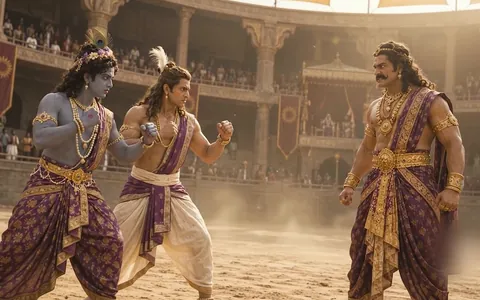
We produce AI microdramas for platforms in India and abroad. Our writers build the hooks, our directors lock every character's look before a single frame is generated, and our sound designers mix for earphones. Our own reels cover drama, devotion, history and explainers, so we have seen first-hand how differently each genre has to be paced.
Once the script, voices and look book are approved, we produce about 10 minutes of finished content a week, so a typical 75-minute season takes around eight weeks. We price AI production at ₹10,000 to ₹30,000 per finished minute, depending on action, languages and sound.
The format is young, the audience is huge, and the cost of making a good story is falling fast. If you have a story that would work in two-minute pieces, I would love to hear it.
Frequently asked questions
What is a microdrama?
A microdrama is a scripted series made for a phone held upright. Episodes run one to three minutes in a 9:16 frame, each ends on a hook, and a full story usually runs 30 to 80 episodes, or about 75 to 80 minutes in total.
How big is the microdrama market in India?
Media Partners Asia puts India's 2026 microdrama revenue at $322 million, more than triple the year before, making India Asia's largest microdrama market outside China. Analysts quoted by TechCrunch expect $3 billion to $4 billion a year by 2030.
Which are the biggest microdrama apps in India?
Kuku TV and Story TV lead, alongside Quick TV and ShortFree. Established platforms have launched their own: ZEE5's Bullet, Amazon Prime Video's Fatafat, JioHotstar's Tadka and Hoichoi's Sooper.
Do Indian viewers accept AI-generated microdramas?
Largely, yes. In the Meta-Ormax study of 2,000 viewers, 47% said AI-generated microdramas feel unique and creative, 38% said they prefer real actors and only 6% said they would avoid AI content entirely.
What is Dolphin AI Film Studio?
It is EloElo Group's AI production platform, launched at the 57th International Film Festival of India in Goa in November 2026. It covers scripting to finished scenes and includes World Lock, which keeps characters, locations and props consistent.
How much does an AI microdrama cost?
FilmE prices AI production at ₹10,000 to ₹30,000 per finished minute, so a typical 75-minute microdrama season costs ₹7.5 lakh to ₹22.5 lakh. Traditionally shot microdramas cost ₹20,000 to ₹30,000 per minute, per The Hollywood Reporter India.
Sources
- Media Partners Asia via Advanced Television: Micro drama revenue at $20bn in 2026 (26 Nov 2026)
- TechCrunch: India's EloElo nabs $80M from NBCUniversal (3 Nov 2026)
- Social Samosa: EloElo Group launches Dolphin AI Film Studio (23 Nov 2026)
- Indian Television: EloElo launches AI film studio targeting India's micro-drama market (23 Nov 2026)
- Meta: Social feeds are powering India's micro-drama boom, Meta-Ormax report (18 Mar 2026)
- The Hollywood Reporter India: India's Microdrama Boom