AI production for streaming: how India, the UK, the US and Singapore are approaching it
Netflix has used generative AI on nearly 300 titles this year. JioHotstar streamed a 100-episode AI Mahabharat. The UK wants it disclosed and Singapore is paying for it. A producer's guide to four very different markets.
Key points
- US: Netflix says creative partners used generative AI on about 300 titles in 2026, and some AI footage was made twice as fast at half the cost.
- India: JioHotstar's AI series Mahabharat: Ek Dharmayudh ran 100 episodes, and India's digital subscription revenue grew 60% in 2025.
- UK: 86% of Britons want AI use in media disclosed, according to the BFI.
- Singapore: IMDA's S$48 million programme funds AI-assisted and short-form content.
- Cross-border AI work goes smoothly when rights, consent, disclosure and delivery specs are agreed before production.
A year ago, when I talked to producers abroad about AI, the conversation usually started with "Is anyone actually doing this?"
That question has gone. Netflix now says its creative partners used generative AI on roughly 300 titles in 2026. JioHotstar streamed a 100-episode AI-made Mahabharat. The questions I hear today are much more practical: How do we do it well? What will audiences accept? What are the rules? And can we work with a studio on the other side of the world?
The answers depend a lot on where you sit. India, the United States, the United Kingdom and Singapore are all moving, but each for different reasons and with different worries. Here is how I see the four markets, from the production floor.
The short version
| Market | Why AI is taking off | What people worry about |
|---|---|---|
| India | Huge audiences, many languages, tight budgets, love of mythology | Quality slips that audiences spot instantly |
| United States | Premium streaming and the cost of big VFX shots | Performers' likeness, consent and jobs |
| United Kingdom | Independent producers and public broadcasters | Trust, disclosure and copyright |
| Singapore | Government funding and a regional hub role | Building skills fast enough |
United States: from experiment to everyday tool
The US is where AI first appeared openly in a big streaming original. In July 2025, Netflix co-CEO Ted Sarandos revealed that a building-collapse sequence in the Argentine series The Eternaut was made with generative AI. He said it was finished "10 times faster" than traditional VFX would allow, and would not have been feasible on that show's budget otherwise.
By mid-2026, that one shot had turned into a pattern. In its second-quarter shareholder letter, Netflix said creative partners had used generative AI on about 300 titles, mostly in post-production: enhancing crowds, building historical battles and creating establishing shots. The letter put it plainly: "In some cases, productions would have had to leave out key shots and sequences in the absence of GenAI technology."
Sarandos also gave the clearest cost figure I have seen from a major streamer. Talking about 17 AI-enhanced minutes in the documentary The American Experiment, he said:
Those 17 minutes… were produced twice as fast and at half the cost of previous options.Ted Sarandos, co-CEO, Netflix, on the Q2 2026 earnings call
What struck me more, though, was the line he kept coming back to: "it takes great artists to make something great, and AI is not changing that." That matches everything we see in our own work.
Studios are building their own tools too. Back in 2024, Lionsgate partnered with Runway to train a model on its own catalogue. Its vice chair, Michael Burns, called AI "a great tool for augmenting, enhancing and supplementing our current operations." Prime Video has piloted AI-aided dubbing and, in September 2026, added AI lip-sync to the human-dubbed English version of Maxton Hall.
The rule that matters most in the US: consent
America is also where the rules on performers are most developed. Under SAG-AFTRA agreements:
- Producers need clear, separate consent before creating or using a digital replica of a performer, and consent again for each new use.
- Performers get at least 48 hours' notice before a scan, with a description of the intended use.
- Using a wholly synthetic performer means notifying the union and bargaining first.
If you are a US producer commissioning AI work abroad, my advice is simple: if a real person's face or voice is involved, the paperwork comes before the pixels. Original AI characters avoid most of the complexity, which is why our work uses original or mythological characters rather than any living performer's likeness.
India: scale, mythology and a very sharp audience
India is the volume market. The FICCI-EY report found the media and entertainment sector grew 9 percent to ₹2.78 trillion in 2025. Digital subscription revenue jumped 60 percent to ₹163 billion, from 216 million paid video subscriptions across 143 million households.
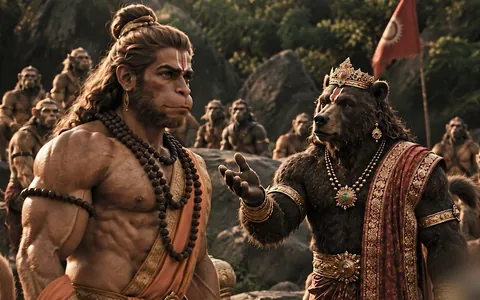
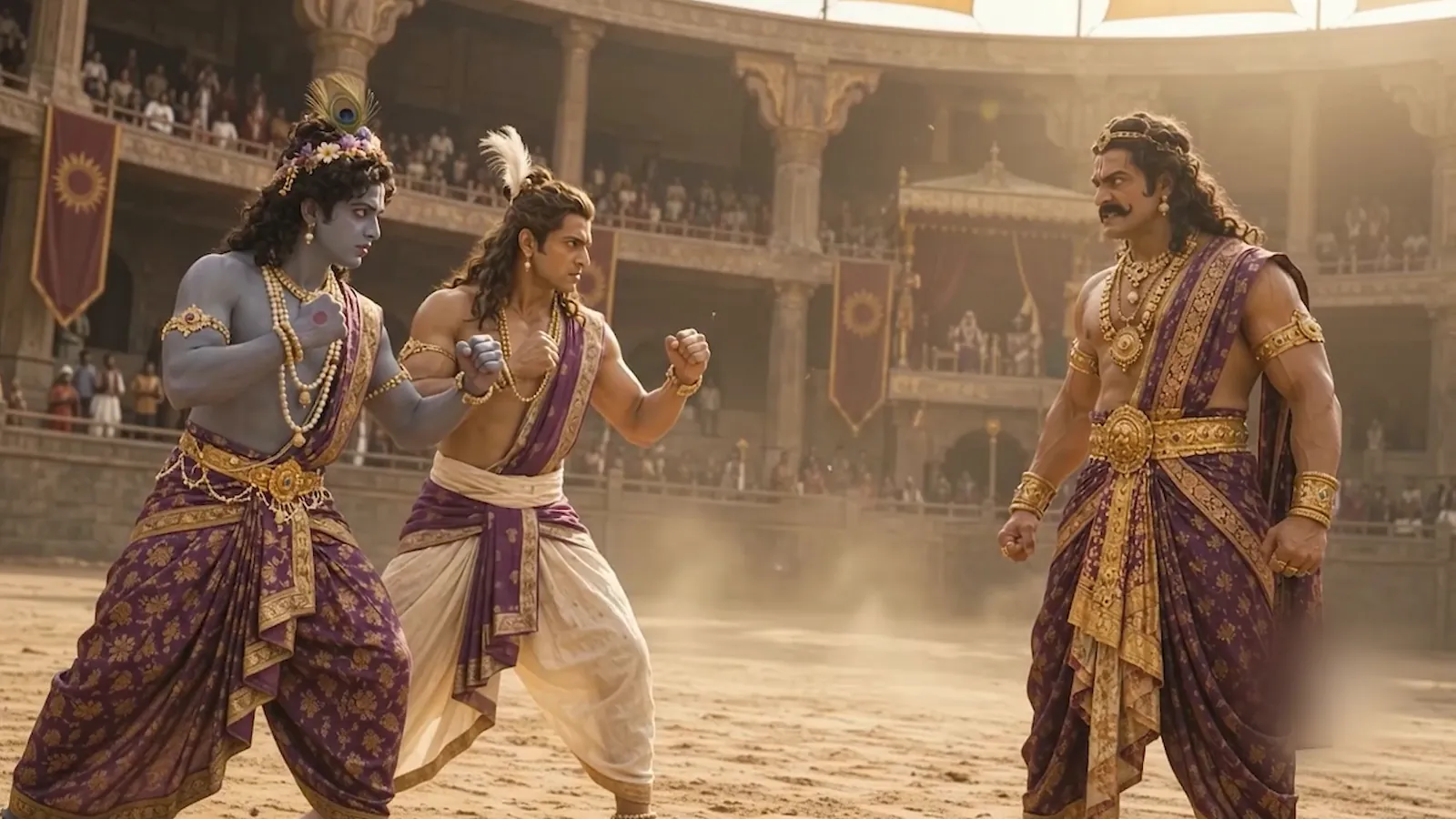
Add many languages and a deep love of mythology, and you can see why AI took off here faster than almost anywhere. The landmark so far is Mahabharat: Ek Dharmayudh, made by Collective Media Network with JioStar. It streamed on JioHotstar from 25 October 2025 and on Star Plus the next evening, with 100 episodes in its first instalment. JioHotstar reported more than 6.5 million views on launch day.
The man behind it, Vijay Subramaniam of Collective Artists Network, has been blunt about the work involved:
It's hardcore engineering, not just prompting.Vijay Subramaniam, Founder and Group CEO, Collective Artists Network, to The Hollywood Reporter India
He said the team was close to 130 or 140 people, structured like an animation studio, and estimated a conventional version with the same visuals would have cost ₹150 crore to ₹200 crore.
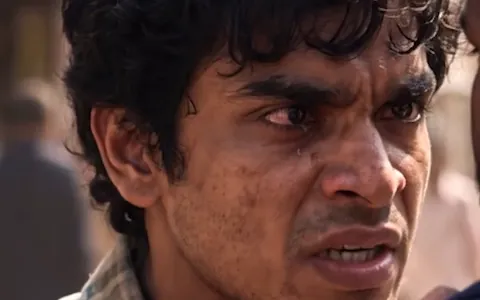
But here is the part every producer should study. Within a week of launch, viewers were sharing screenshots of a modern bedside table with drawers in a Hastinapur palace, and a framed photo of a man in a suit on a bedroom wall. One joke went viral: IKEA must have existed in Mahabharat times.
Indian audiences know these stories by heart. They will forgive a lot, but not a mistake in a world they grew up with.Prita Bali, Founder, FilmE Productions
That is the lesson I took from it. In India, AI makes epic worlds affordable. But every frame needs a human eye that knows the culture, because the audience certainly does.
United Kingdom: trust first
The UK screen sector is curious about AI and careful about it. The BFI's report AI in the Screen Sector, published in June 2025, is the best overview I know.
It found the UK has more than 13,000 creative technology companies, and that the BBC had commissioned 12 AI pilot projects. In a 2023 survey, 17 percent of UK producers had used generative AI in production and 40 percent planned to.
The report also documents real concerns: AI trained on scripts without permission, jobs, and audience trust. The figure I quote most often is this one: 86 percent of British respondents want clear disclosure when AI is used in media production.
So when we work with UK teams, three habits matter:
- Disclose AI use in credits or programme information. It builds trust rather than losing it.
- Know where your tools' training data comes from, and prefer properly licensed ones.
- Keep a named human creative lead on every project, and say so.
The BFI also notes that generative AI is lowering barriers for small teams and independent creators. That is exactly where an overseas production partner can make the biggest difference for a UK indie.
Singapore: the government is paying for it
Singapore has taken the most direct route of all: it funds adoption. On 18 June 2026, IMDA launched the Digital Content and Capability Development programme, worth S$48 million over four years.
It pays for two things. One is digital content for mobile-first audiences, including Singapore stories for young people, adults and seniors. The other is capability: AI-generated content, short-form episodic series in live action and animation, and AI-assisted workflows for development, production and localisation. Companies must be accredited first, and the first round accredited 117 of them.
For studios like ours, Singapore is a natural partner. Funded Singapore companies often need production capacity, and Singapore is just two and a half hours ahead of India, so a working day overlaps almost completely.
Working across borders: the checklist we use
Whether you are a US streamer, a UK broadcaster or a Singapore studio, these are the things we agree before a single frame is generated.
| Agree on | Why it matters |
|---|---|
| Ownership of all outputs | Some tools' terms affect who owns generated material |
| Any real person's face or voice | Consent rules differ by country and union |
| AI disclosure wording | Expected in the UK, increasingly everywhere |
| Delivery specs | Resolution, frame rate, colour space, loudness and subtitles vary by platform |
| Languages and dubbing | Native-speaker review keeps every version natural |
| Cultural review | Prevents the "bedside table in Hastinapur" moment |
| Review rounds | Notes at storyboard cost far less than notes after the final grade |
Time zones help more than people expect. India is five and a half hours ahead of London in winter and ten and a half hours ahead of New York. Send notes at the end of your day and, more often than not, you see the revised scene the next morning.
What I think happens next
My honest prediction: by the end of 2027, nobody will talk about "AI shows" any more, just as nobody talks about "digital shows". The tools will sit inside every pipeline. The difference between good and bad work will come down to the same things it always has: story, taste, performance and sound.
Sarandos said AI savings will probably be reinvested in more content. If that happens across the industry, the real winners will be storytellers, especially in markets like India where great stories have always outnumbered the budgets to make them.
How FilmE works with platforms abroad
FilmE Productions works with platforms in India and remotely with teams elsewhere. We deliver in 4K with professional grading and immersive sound mixes built to each platform's specs. Every project has a human writer, director and sound designer leading the AI work. We create original characters rather than replicas of living performers, and add clear AI disclosure whenever you want it.
Once the script, voices and look book are approved, we produce about 10 minutes of finished content a week. If you are commissioning from the UK, the US or Singapore, book a free consultation and we will walk you through how we would handle your project.
Frequently asked questions
Can a UK or US streamer commission AI production from India?
Yes. Indian studios such as FilmE deliver to international platform specs in 4K with professional grading and immersive sound. Agree rights, AI disclosure and delivery specs in the contract before work starts.
How many Netflix titles use generative AI?
Netflix said its creative partners used generative AI workflows on about 300 titles in 2026, mostly in post-production, for crowds, historical battles and establishing shots.
Was India's AI Mahabharat series successful?
JioHotstar reported over 6.5 million views on launch day for Mahabharat: Ek Dharmayudh. Viewers also mocked visible errors such as a modern bedside table in a palace scene, a reminder that AI work needs careful review.
Do US union rules apply to AI work made in India?
They apply when the production falls under a SAG-AFTRA agreement. If a real performer's face or voice is involved, follow its consent and notice rules. Fully original AI characters avoid most of these issues.
Does Singapore fund AI content?
Yes. IMDA's Digital Content and Capability Development programme, launched in June 2026, puts S$48 million over four years into digital content, including AI-generated and short-form episodic work, for accredited companies.
Sources
- IBC: Netflix uses GenAI on 300 titles in 2026 (23 Jul 2026)
- Fortune: Netflix made 17 minutes of a documentary twice as fast and at half the cost (16 Jul 2026)
- Engadget: Netflix is already using generative AI in its original shows (18 Jul 2025)
- JioStar: JioStar and Collective Media Network launch Mahabharat: Ek Dharmayudh (Oct 2025)
- Indian Television: JioHotstar's AI Mahabharat breaks records
- Business Today: Netizens on AI Mahabharat series with modern props (3 Nov 2025)
- The Hollywood Reporter India: Vijay Subramaniam on AI Mahabharat (Nov 2025)
- EY: FICCI-EY report on India's M&E sector in 2025 (Mar 2026)
- SAG-AFTRA: Artificial intelligence resources
- PPC Land: Prime Video puts AI lip-sync dubbing on Maxton Hall (Sep 2026)
- BFI: AI in the Screen Sector, Perspectives and Paths Forward (9 Jun 2025)
- TechNode Global: Singapore launches S$48M programme (18 Jun 2026)
- Runway: Runway partners with Lionsgate (18 Sep 2024)