How AI is changing OTT series production in India
Indian platforms want more shows, in more languages, for less money. A producer's honest look at what AI changes in a web series, what it does not, and what the AI Mahabharat taught everyone.
Key points
- India had 216 million paid video subscriptions in 2025, and digital subscription revenue grew 60%, per FICCI-EY.
- JioHotstar's AI Mahabharat: Ek Dharmayudh drew 6.5 million views on launch day, and also viral mockery for a modern bedside table in a palace.
- Mythology, history, fantasy and kids' content gain most, because their worlds cost the most to shoot.
- AI replaces sets, crowds and much of the VFX. It does not replace writing, performance, editing or sound.
- Good commissions lock the look and voices before episode one and review at storyboard, not after the grade.
Every commissioning conversation I have had this year comes back to the same tension. Indian audiences want more stories, in more languages, and they want them now. Platform budgets have not grown at anything like the same pace.
The numbers make the pressure obvious. The FICCI-EY report found 216 million paid video subscriptions across 143 million Indian households in 2025, and digital subscription revenue up 60 percent to ₹163 billion. That is an enormous audience waiting for content. Very few platforms can afford to commission everything they would like.
AI is changing that maths. Not by replacing the people who make a series, but by removing the most expensive parts of making one. Here is what that looks like from inside a production.
The moment everyone noticed: an AI Mahabharat on JioHotstar
If you want to understand where AI series stand in India, start with Mahabharat: Ek Dharmayudh. Made by Collective Media Network with JioStar, it began streaming on JioHotstar on 25 October 2025 and aired on Star Plus the next evening. The first instalment ran to 100 episodes, and JioHotstar reported more than 6.5 million views on launch day.
Vijay Subramaniam, who led it, has been very open about what it took. He told The Hollywood Reporter India the team was close to 130 or 140 people, organised like an animation studio, with writers, directors, music directors and sketch artists. And he estimated that making the same visuals conventionally would have cost ₹150 crore to ₹200 crore.
It's hardcore engineering, not just prompting.Vijay Subramaniam, Founder and Group CEO, Collective Artists Network
Then came the other side. Within a week, viewers were sharing screenshots of a modern bedside table with drawers in a Hastinapur palace, and a framed photo of a man in a suit on a bedroom wall. "IKEA must have existed in Mahabharat times" became the joke of the week.
I don't share that to mock anyone. It was a genuinely ambitious project, and the launch numbers prove the appetite is real. I share it because it is the clearest lesson in our industry right now: AI can build the palace in an afternoon, but someone who knows the story has to check every corner of it.
The audience for mythology in India is the most expert audience in the world. They have seen these stories a thousand times. That is a gift, and it is a responsibility.Kallol Guha, Senior Producer, FilmE Productions
The next big test is in cinemas. Abundantia Entertainment and Collective Media Network announced Chiranjeevi Hanuman – The Eternal as India's first AI-generated feature film for theatrical release, with more than 50 engineers working alongside cultural scholars. Subramaniam has promised "complete transparency about the role of AI in the creative process", which I think is exactly the right instinct.
What AI replaces, and what it doesn't
A traditional series spends a large share of its budget on things viewers never consciously notice: sets, locations, travel, crowds, costumes, lighting rigs and VFX. AI replaces a lot of that.
| Part of production | With AI |
|---|---|
| Sets and locations | Generated: palaces, battlefields, oceans, space, historical cities |
| Crowds and extras | Generated, with no casting, travel or catering |
| VFX | Built into the shot rather than added afterwards |
| Re-shoots | Regenerate shots instead of rebooking cast, crew and location |
| Writing | Still human |
| Direction and look | Still human |
| Voice performance | Human or AI, always directed and reviewed |
| Editing, grading and sound | Still human craft |
The bottom half of that table is why AI series vary so wildly in quality. The tools are available to everyone. Taste is not.
Netflix, which used generative AI on about 300 titles this year, says much the same. Its co-CEO Ted Sarandos keeps repeating that "it takes great artists to make something great, and AI is not changing that."
The genres that gain the most
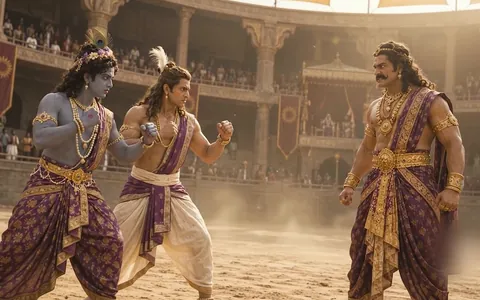
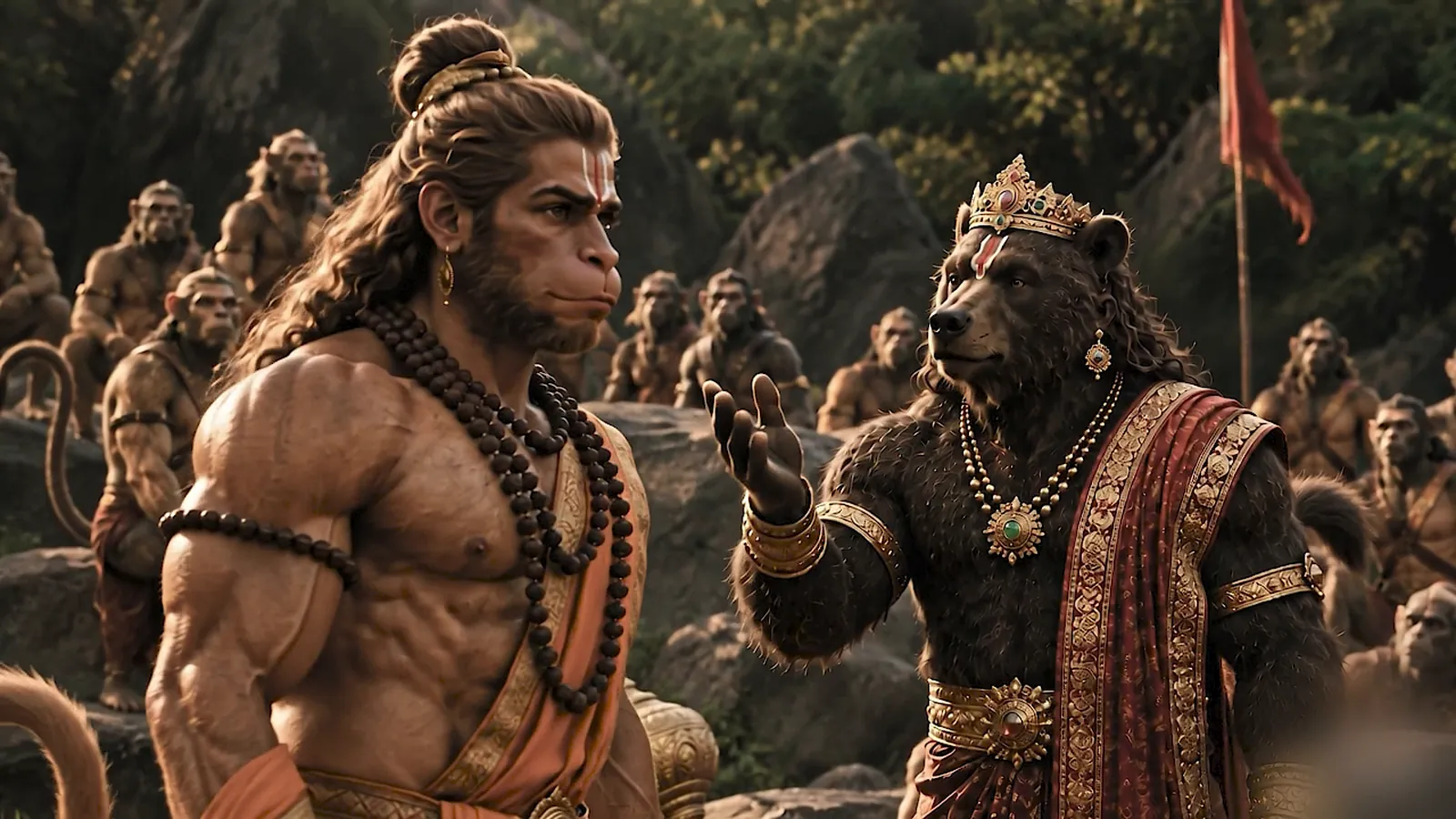
Mythology is the obvious winner in India, and it's where much of our own work sits. In our Hanuman film, Lanka burns behind him as he roars across the city. In our Krishna film, he stands on a cliff with his flute against the rising sun, then dives into the ocean. On a traditional shoot, any one of those scenes could eat a season's budget.
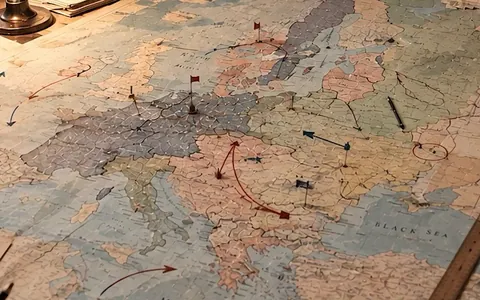
History and period drama gain for the same reason. Our history reel recreates a Second World War command bunker, maps and all. No period set required.
Fantasy and science fiction were almost impossible on Indian OTT budgets. They are now very much within reach.
Kids' and learning content works well because it often uses stylised worlds and needs to be made in several languages. Our young Hanuman, reaching out to hold the sun, is the kind of image children remember.
Devotional content is another natural fit. Our Mahakali reel, with her army behind her under a lightning-split sky, is the kind of image that would be extraordinarily hard to stage.
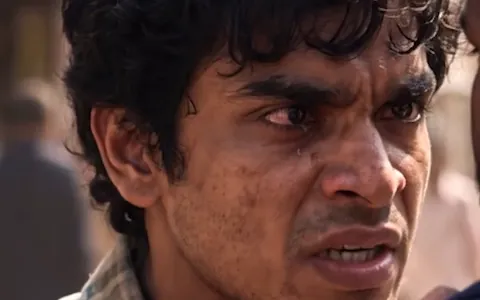
Contemporary drama gains less. A story set in a Mumbai flat is cheap to shoot traditionally, and quiet close-up performances still need enormous care in AI. That said, our drama reel about a young man, his mother and a festival business idea shows it can work when the emotion is directed carefully.
How timelines change
On a traditional shoot, a scene that doesn't work is expensive to fix, so you live with it. With AI, fixing it means regenerating shots. That moves the hard decisions earlier. The best AI series lock three things before episode one:
- The look book: every main character's face, costume, jewellery and colour palette.
- The voices: who plays each character and how they sound, in every language.
- The storyboard: every scene planned shot by shot.
Once those are approved, production moves fast. At FilmE we produce about 10 minutes of finished content a week. A six-episode season of 20-minute episodes takes roughly three months, often less for simpler shows.
How budgets change
AI does not make a series free. Costs move from physical production to creative labour and computing. Writers, directors, artists, editors and sound designers are all still paid. Generation costs money too, especially at 4K, and every good shot takes several attempts.
The saving is biggest exactly where a traditional shoot would be most expensive: huge worlds, many locations, crowds and heavy VFX. Subramaniam's ₹150 crore to ₹200 crore estimate for a conventional Mahabharat tells you why platforms are paying attention.
For reference, we price AI production at ₹10,000 to ₹30,000 per finished minute. A 60-minute series would therefore cost ₹6 lakh to ₹18 lakh, depending on action, languages and sound.
How platforms should commission an AI series
After a year of these projects, here is what I would tell any commissioning editor.
- Brief the audience, not just the plot. Who is this for, and are they watching on a TV or a phone? Framing and pacing differ completely.
- Approve the look early, and properly. A look book review takes an hour. Redesigning a lead character after episode ten takes weeks.
- Build in cultural review. Especially for mythology and history. Someone who knows the world should check every episode for anachronisms before release.
- Review at storyboard and rough cut. Notes are fast and cheap at those stages, slow and expensive after grading.
- Plan languages at the start. Casting voices for every language up front is far easier than dubbing later.
- Agree on AI disclosure. Audiences increasingly expect honesty about how a show was made.
The most expensive note on an AI series is the one that arrives after the final mix. Everything we do is designed to get the notes in early.Kallol Guha, Senior Producer, FilmE Productions
Where I think this goes
AI is moving Indian OTT from a model where a few big shows carry a platform to one where many mid-sized shows can be tested quickly, and the best ones grow into franchises. Subramaniam goes further, predicting that mid-tier films will "go away into oblivion" while big ones get bigger. I am less certain about that. But I am sure the platforms that win will treat AI as a production method and still hire for taste.
FilmE has made more than 11 titles and works with 3 OTT platforms, across mythology, devotion, history, drama and explainers. If you are planning a series and want to see what AI can do for it, book a private viewing of our work. I would love to show you.
Frequently asked questions
Can AI make a full OTT web series?
Yes. JioHotstar's Mahabharat: Ek Dharmayudh ran 100 episodes in its first instalment. A good AI series still needs human writers, directors, voice performers, editors and sound designers.
Which genres suit AI series best?
Mythology, history, fantasy, science fiction, animation and kids' learning content, because building their worlds is the most expensive part of a traditional shoot.
How long does an AI web series take to make?
At FilmE, about 10 minutes of finished content a week once the script, voices and look book are approved. A six-episode season of 20-minute episodes takes about three months.
How much does an AI series cost compared with a traditional shoot?
Vijay Subramaniam of Collective Artists Network estimated a conventional version of the AI Mahabharat would have cost ₹150 crore to ₹200 crore. FilmE prices AI production at ₹10,000 to ₹30,000 per finished minute.
What are the risks of AI series?
Visible mistakes, such as modern objects in a period setting, and performances that feel empty. Both are avoided with cultural review, locked look books and human direction.
Sources
- EY: FICCI-EY report on India's M&E sector in 2025 (Mar 2026)
- JioStar: Launch of Mahabharat: Ek Dharmayudh (Oct 2025)
- Indian Television: JioHotstar's AI Mahabharat breaks records
- Business Today: Netizens on AI Mahabharat series with modern props (3 Nov 2025)
- The Hollywood Reporter India: Vijay Subramaniam on AI Mahabharat (Nov 2025)
- The Hollywood Reporter India: Chiranjeevi Hanuman, India's first AI-generated feature film
- IBC: Netflix uses GenAI on 300 titles in 2026