Making kids' learning shows with AI video
Parents and child-safety groups are rightly worried about low-quality AI videos aimed at children. Here's how to use the same technology to make learning shows that are safe, accurate and genuinely loved.
Key points
- More than 200 advocacy groups have called for AI-generated videos to be banned from YouTube Kids, citing mass-produced, low-substance content.
- The problem is careless production, not the technology. Kids' learning content actually suits AI well.
- Every fact must be checked by someone with subject knowledge, and every frame reviewed by a person.
- A consistent, lovable character builds the trust that keeps children coming back.
- Short episodes with one idea, a clear question and an answer work best.
Let me start with the uncomfortable part, because any honest article about AI and children has to.
There's a lot of bad AI content aimed at kids right now. More than 200 advocacy groups and child-development experts have called for AI-generated videos to be banned from the YouTube Kids app, according to Bloomberg. eMarketer summed up their concern as "mass-produced, low-substance content that exploits algorithmic recommendations." eMarketer, citing Precisify, reports that YouTube reaches 80% of boys and 72% of girls aged 6 to 9, so this isn't a small problem.
As a studio that makes content for young viewers, we take that criticism seriously. And I'd argue it actually points to the opportunity. The problem isn't that the content is made with AI. It's that it's made carelessly, by people who never watch what they publish.
Children's learning content is where AI video can do the most good. It's also where carelessness does the most harm. Here's how we think about getting it right.
Children deserve the best stories we can make, not the cheapest ones we can get away with. AI should raise the bar for kids' content, not lower it.Prita Bali, Founder, FilmE Productions
Why kids' learning content suits AI
Learning shows have several features that play directly to AI's strengths:
- Stylised, imaginative worlds. Space, oceans, the inside of the human body, ancient kingdoms. These are expensive to film or animate traditionally, and natural for AI.
- Recurring characters. A consistent host or hero can carry hundreds of episodes.
- Many languages. India alone has a dozen major languages, and learning apps want all of them.
- Short, structured formats. One idea per episode suits careful, repeatable production.
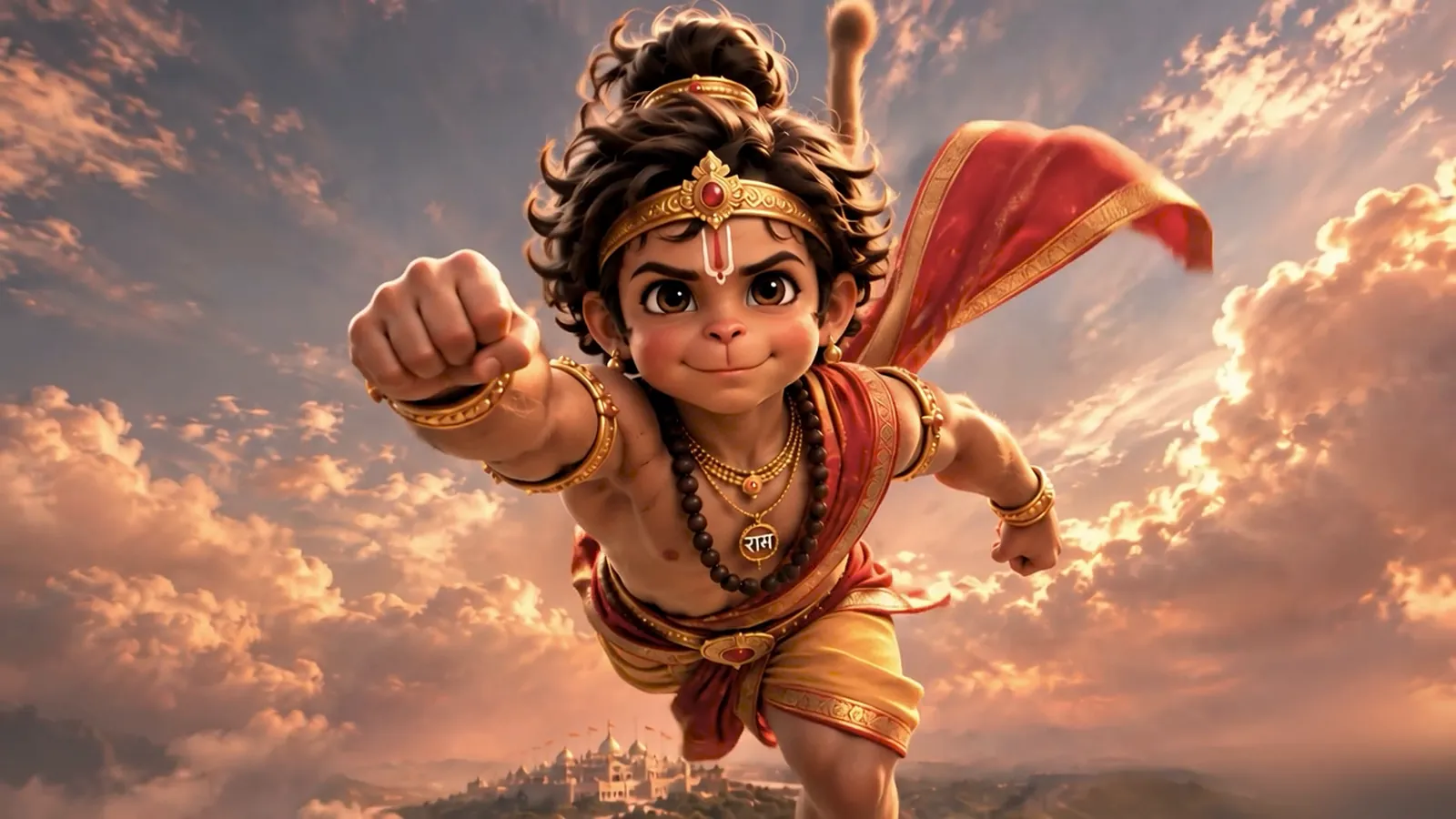
Our image of young Hanuman, reaching out to hold the glowing sun in deep space, is a good example. It comes from one of the best-loved stories in Indian childhood: the little boy who thought the sun was a fruit. It would be costly to stage, and AI lets us bring it to life in a warm, friendly style that children instantly connect with.
Safety and accuracy come first
For children, two rules sit above everything else.
1. Every fact is checked by a person
AI language models can state wrong facts with complete confidence. For learning content that's unacceptable. Scripts should be written or reviewed by someone with real subject knowledge, then checked again before production. If an episode says the sun is a star, the distance to the Moon or how plants make food, a human has verified it.
2. Every frame is reviewed by a person
Generated video can contain strange small details: a sixth finger, an odd expression, a background that doesn't make sense. Adults often miss them. Children frequently don't, and some images can genuinely frighten them.
Remember the viral screenshots from JioHotstar's AI Mahabharat, with a modern bedside table in an ancient palace? Adults laughed. In a children's show, an odd detail can confuse or unsettle a young viewer. Nothing generated should reach a child without a person approving it frame by frame.
We watch every kids' episode the way a five-year-old would: closely, more than once, and with no patience for anything that looks wrong.Prita Bali, Founder, FilmE Productions
A simple review checklist
We run every children's episode through these questions before it's delivered:
| Check | Question to ask |
|---|---|
| Facts | Is every statement correct and appropriate for this age group? |
| Images | Is every frame free of distortions and anything frightening? |
| Language | Are the words simple, kind and correctly pronounced? |
| Representation | Do the characters reflect the children watching? |
| Pace | Is there time to think before the answer arrives? |
| Ending | Does the child leave with one clear idea or something to try? |
Characters children trust
Children come back to characters they love. That makes consistency absolutely essential.
A host who looks slightly different in every episode feels unsettling, even if a child couldn't explain why. Locking the character's face, colours, costume and voice before production, and checking every episode against that reference, builds the trust that keeps children watching and keeps parents comfortable.
Voice matters just as much as looks. A warm, patient voice that sounds like a real person makes learning feel safe. A flat, robotic one does the opposite. For children's content, we take great care with voice casting and direction, whether the voice is human or AI.
Formats that work
These are the formats we recommend most often:
- Question and answer. Open with a question a child would actually ask. "Why is the sky blue?" Answer it within the episode. End with something to try at home.
- Story first. Wrap the lesson inside a short adventure. Children remember stories far better than lectures.
- Short and focused. One idea per episode. For younger children, three to seven minutes. For learning apps, vertical episodes of one to three minutes work well.
- Repetition with variety. Familiar openings and endings, so children feel at home, with new content in between.
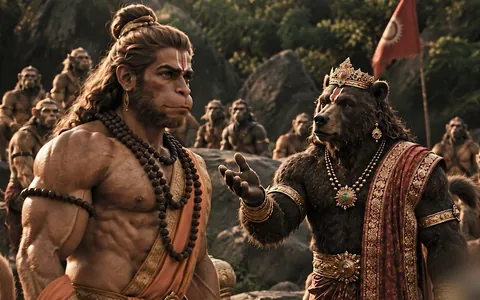
- Mythology as a gateway. Indian children grow up with Hanuman, Krishna and Ganesha. Their stories are a wonderful way into values, history and even science.
Making it in many languages
AI makes multi-language production practical, but children's content needs extra care here.
- Use native-speaker voices for each language, not one voice translated into many.
- Adapt, don't translate. Jokes, examples and names should feel local in each version.
- Review every version with someone who speaks the language fluently and understands children.
- Check pronunciation of every name and key word. A child will repeat exactly what they hear.
Questions to ask any studio making AI content for children
If you're a platform or an app commissioning children's content, these questions will quickly tell you whether a studio takes safety seriously. We're happy to answer every one of them.
- Who checks the facts? Ask for the name and background of the person who reviews scripts.
- Who watches every frame? There should be a named person responsible for frame-by-frame review before delivery.
- How do you keep characters consistent? Ask to see the character reference sheet, or look book.
- How are voices chosen and directed? For each language, who performs or directs the voice, and who checks pronunciation?
- What happens if something slips through? Ask how quickly an episode can be corrected and redelivered.
- Will you disclose AI use? Parents increasingly want to know. A good studio will be open about it.
If a studio can't answer these clearly, that tells you everything you need to know.
The industry is raising its standards too
It's encouraging to see larger productions treating cultural accuracy seriously. The team behind Chiranjeevi Hanuman – The Eternal, announced as India's first AI-generated feature film for cinemas, said it is working with cultural scholars and literary experts, and Vijay Subramaniam of Collective Artists Network committed to "complete transparency about the role of AI in the creative process."
That's the right direction for all of us, and it matters most of all when the audience is children.
How FilmE makes children's content
FilmE makes learning and edutainment content for platforms and apps. Every script is checked, every frame is reviewed and every voice is directed by a person. We design characters children can grow up with, and we make every language version feel native.
If you're building a kids' learning show or app, book a free consultation. We'd love to talk through format, characters and languages, and show you how carefully this can be done.
Frequently asked questions
Is AI-made content safe for children?
It can be, with the right process. Every script should be checked by someone with subject knowledge, every frame reviewed by a person, and nothing generated should reach children without human approval.
Why are people worried about AI videos for kids?
More than 200 advocacy groups have called for AI-generated videos to be banned from YouTube Kids, arguing that much of it is mass-produced, low-substance content designed to exploit recommendation algorithms.
How long should a kids' learning episode be?
For younger children, three to seven minutes with one main idea is a common format. Short vertical episodes of one to three minutes also work well for learning apps.
Can AI kids' shows be made in Indian languages?
Yes. One show can be produced in Hindi, Bengali, Tamil and other languages with native-speaker voices and review, so pronunciation and tone feel natural to children.
What makes a good AI kids' show?
A consistent, warm character; accurate, age-appropriate facts; a calm, human-sounding voice; one clear idea per episode; and a human review of every frame before release.