Sound design for AI films: why audio makes or breaks immersion
Viewers will forgive a soft frame. They will not forgive bad sound. A producer's guide to the four layers that turn AI images into a film people stay with.
Key points
- Sound is where most AI videos fall down, and where finished films stand out.
- 57% of microdrama viewing in India is ambient, with eyes often elsewhere, per Meta and Ormax, so sound carries the story.
- A proper mix has four layers: dialogue, foley, ambience and music, built separately and balanced on purpose.
- Mix for the screen people actually use: earphones and phone speakers as well as TVs.
- AI helps clean, draft and dub. Taste and timing still come from a sound designer.
There's an old saying among filmmakers: an audience will forgive a bad picture, but never bad sound. I didn't fully believe it until I started working on AI films.
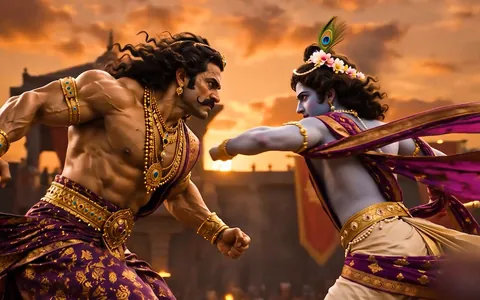
AI can now generate a breathtaking image. Krishna on a cliff, flute raised, the sun splitting the clouds behind him. Put that on screen with thin, generic audio and it feels like a screensaver. Put the same image under a proper mix, with wind across the rock, a distant flute line, the slow swell of strings as the sun clears the horizon, and people lean in.
Sound is what turns AI images into a film. It is also, in my experience, where most AI work is weakest. So let me explain why, and what we do about it.
Why AI video usually sounds wrong
Most video models either produce no sound at all, or produce a single generated track. When there is a track, it tends to have the same problems:
- Everything sits at the same level, so nothing stands out and nothing recedes.
- Effects are generic. Every footstep sounds like every other footstep.
- Sound isn't tied to the edit, so it drifts or jumps when shots are trimmed.
- Voices lack breath, pauses and the tiny imperfections that make speech feel human.
The picture side of AI has moved incredibly fast. The sound side of finished storytelling still depends almost entirely on people who know how to build a mix.
We now spend almost as much time on what you hear as on what you see. On an AI film, sound is where the life comes from.Kallol Guha, Senior Producer, FilmE Productions
Why sound matters even more on phones
Here is a statistic that changed how we mix. The Meta-Ormax study of Indian microdrama viewers found that 57% of viewing happens in "ambient" mode, meaning people are watching while doing something else. Cooking, commuting, half-listening on a break.
Think about what that means. For more than half of viewing time, eyes are drifting away from the screen. What keeps people in the story is what they hear: the voice, the music, the sound cue that pulls them back at the right moment. On a phone, sound isn't decoration. It's the thread holding the viewer.
The four layers of a proper mix
Every scene in a well-made film is built from four layers. Each is made separately, then balanced together.
| Layer | What it is | What it does for the viewer |
|---|---|---|
| Dialogue | Every spoken line, cleaned and levelled | Lets them follow the story without straining |
| Foley | Footsteps, cloth, hands, objects, weapons | Makes characters feel physically present |
| Ambience | The air of a place: wind, crowds, rooms, fire | Puts them inside the world |
| Music | Score and songs | Tells them how to feel |
In AI work, foley matters even more than usual. Generated characters can feel weightless, as if they float slightly above the world. The rasp of a sword being drawn, a silk sari brushing a stone floor, bare feet on temple steps, the crack and roar of a city on fire: these give characters weight and make the world feel real.
Dialogue: get this wrong and nothing else matters
Dialogue always comes first. If viewers cannot hear the words clearly, the most beautiful image in the world won't save the scene.
AI voices have improved enormously, and for some projects they work well, particularly narration and explainers. For drama, we prefer human voice actors for lead characters, or at minimum a human performance guiding the AI voice. Emotion lives in tiny things: a catch in the throat, a breath before a confession, a line delivered slightly too fast because the character is frightened.
Whatever the source, every line needs cleaning, levelling and checking. Pronunciation deserves special care, especially for names and words in Sanskrit, Bengali, Tamil or any language the model handles less well. A mispronounced name in a mythological story is the audio equivalent of a modern bedside table in a palace. The audience will notice instantly.
Big platforms are taking this seriously. Prime Video, for example, has kept human-dubbed audio and used AI only for lip-sync on the English version of Maxton Hall. Its technology VP, Raf Soltanovich, described the aim as "a more seamless and immersive way for customers to enjoy global content." Human voice, AI assistance. That balance is the right one.
Music: score, not wallpaper
The quickest way to make a film feel cheap is to lay one stock track under every scene. Good scoring follows the story. It holds back in quiet moments, builds before a reveal, and goes completely silent when silence is stronger.
For mythology and devotional content, music carries enormous meaning. A particular instrument, a raga or a chant signals a whole world to an Indian audience within a second. Think of a moment like Mahakali appearing before her army in our devotional reel. A scene like that needs weight, not volume: the right low percussion or held drone can make the lightning feel as if it belongs to her.
When Vijay Subramaniam's team launched the trailer for JioHotstar's AI Mahabharat, he described what they were aiming for as "emotional, grand, and immersive." Notice that two of those three words are really about sound.
If you can mute a scene and still feel the same, the music isn't doing its job. If you mute it and the scene dies, it is.Kallol Guha, Senior Producer, FilmE Productions
Mixing for TVs, phones and earphones
The same film is now watched on a 65-inch TV in a living room and on a phone held upright on a crowded train. A good mix plans for both.
- For TVs and home theatres, a wider mix with surround or spatial sound lets battles and crowds feel all around the viewer.
- For phones, assume earphones or a tiny speaker. Keep dialogue clearly on top, avoid very deep bass that small speakers cannot reproduce, and don't let music mask voices.
- For microdramas, the first two seconds of sound matter as much as the first frame. A sharp, distinctive sound cue can stop a thumb mid-scroll.
Every platform also sets loudness standards. Delivering to spec means a mix that sounds right on every device and passes the platform's technical checks first time, rather than coming back with a rejection.
Sound starts with understanding the story
The best editors and sound designers I've worked with never start with the waveform. They start with the people on screen. A lead video editor at Sun TV Networks put it, in a conversation with our team, better than I can:
Editing requires understanding the story, living the characters, feeling their emotions to design sound and create music that uplifts the entire show.Lead video editor, Sun TV Networks
That's the part of the job no tool does for you. Before we choose a single effect or note of music, we ask what each character is feeling in the scene, and what we want the viewer to feel. The sound follows from that.
Where AI genuinely helps sound designers
I don't want to sound anti-AI on audio. It's genuinely useful in post-production:
- Cleaning noisy recordings and separating voices from music or background noise.
- Generating draft effects to test ideas quickly before final sound design.
- Producing voices and dubbed versions for review in several languages.
- Speeding up repetitive tasks such as syncing, levelling and conforming to new edits.
What it does not replace is judgement. Out of a hundred possible sounds for a moment, which one makes it land? How loud should it be against everything else? When should the music drop out completely? Those are decisions only a person who understands the story can make.
Netflix, which used generative AI on around 300 titles this year, says the same about the whole process. Its co-CEO Ted Sarandos: "it takes great artists to make something great, and AI is not changing that." In sound, that has never been more true.
A quick checklist before you sign off any AI film
Before we deliver anything, we run through these questions:
- Can every line of dialogue be understood on a phone speaker?
- Does every on-screen action have a sound that matches it?
- Does each location sound like a place, not like silence?
- Does the music support the emotion of each scene, and drop out where it should?
- Are all names and special words pronounced correctly in every language?
- Does the mix meet the platform's loudness and delivery specs?
How we approach sound at FilmE
Every FilmE project has a sound designer from day one, not as an afterthought at the end. We plan sound in the storyboard, build dialogue, foley, ambience and music as separate layers, and mix for the platform and screen your audience actually uses.
It's why our promise is "extraordinary visuals and immersive sound", and not just the first half. If you'd like to hear the difference, book a private viewing and bring your headphones.
Frequently asked questions
Why does AI video often sound flat?
Most video models produce no sound or one generic track where everything sits at the same level. Immersion needs separate layers of dialogue, foley, ambience and music, mixed so each has its own space.
What is immersive or spatial sound?
Sound placed around the listener rather than only left and right. On surround speakers or earphones it makes a crowd feel around you or an arrow feel as if it passes overhead.
Can AI do sound design?
AI can draft effects, clean noisy dialogue and generate or dub voices. Choosing which sounds carry the emotion, timing them to the edit and balancing the mix is still a sound designer's job.
How should sound be mixed for microdramas?
Assume earphones or a small phone speaker. Keep dialogue clearly on top, avoid very deep bass, keep music from masking voices, and make the first two seconds of sound grab attention in the feed.